Masoncrete Builders ·
Stamped Concrete vs. Pavers: Which Is Better for Long Island Winters?
It is one of the most common questions we hear at estimates in Suffolk County: should I go with stamped concrete or pavers? Both can look great and both can last, but they behave differently over a Long Island winter, and they ask different things of you as the owner. Here is how we explain it.
How each one is built
Stamped concrete is a single poured slab. After the base is prepared, concrete is placed and, while it is still workable, textured mats are pressed into the surface to create a stone, slate or brick pattern. Color is added to the mix and highlighted with an accent color, and the finished surface is sealed.
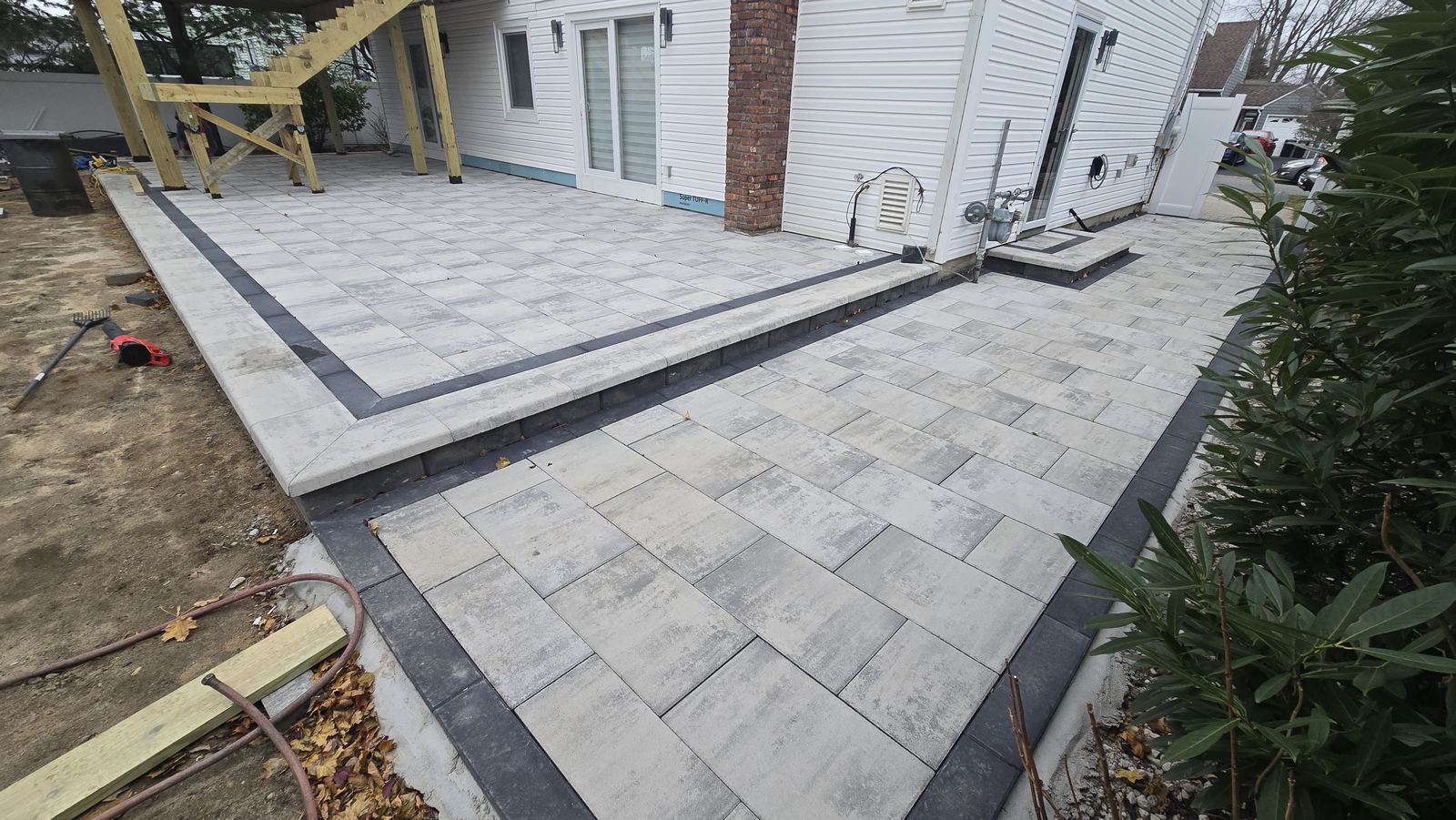
Pavers are individual units, either concrete pavers or large-format porcelain, laid over a compacted stone base and a setting bed, held in place by edge restraint, with joints filled between units.
Either way, the base is what decides whether the surface lasts. A thin or poorly compacted base will cause problems with any material.
Winter performance
Long Island winters bring repeated freezing and thawing, snow, plowing and salt. Each material handles that differently:
- Stamped concrete is one rigid slab. Like all concrete it will crack eventually; control joints are placed so cracks happen where they are planned. The sealer is the first line of defense against water and salt, so keeping it maintained matters.
- Pavers have joints between every unit, so the surface can flex slightly as the ground moves. If a section settles or heaves, the pavers can be lifted, the base corrected and the same pavers reset.
For both, avoid harsh de-icers on new surfaces and use a plastic shovel or a plow with a rubber edge. Our post on protecting concrete from salt and freeze-thaw goes deeper.
Repairs
This is where the two differ most. A damaged area of stamped concrete is hard to patch invisibly, because matching the pattern and color of an existing slab is difficult. A damaged area of pavers can usually be repaired by replacing or resetting individual units, which is why it is worth saving a few spare pavers from your project.
Maintenance
- Stamped concrete: clean and reseal periodically to protect the color and the surface. How often depends on traffic, sun and salt exposure. Driveways need it more than patios.
- Pavers: keep joints filled to discourage weeds and ants and to keep units locked together. Sealing is optional for many products and can enhance color.
Looks
Stamped concrete gives a continuous surface with no joints for weeds, and the pattern can imitate natural stone. Pavers offer real joints and edges, crisp borders and a huge range of shapes, and large-format porcelain gives a clean, modern look that is very popular on Long Island right now. You can see several of our porcelain and paver projects in our gallery.
Cost
Pricing depends on size, access, base work, the pattern or product you choose, and borders or steps. The only way to compare honestly is with quotes for your actual space. We are happy to price both options at your free estimate.
Our take
- Want a continuous decorative surface and you do not mind periodic resealing? Stamped concrete is a great fit. See our stamped concrete page.
- Want easy spot repairs, real joints and borders, or the porcelain look? Go with pavers. See our paver page.
Not sure? Masoncrete Builders installs both, so we have no reason to push you one way. Call us or request a free estimate, and we will walk your yard and help you decide.